


Completing a residential program at a recovery center Montana is a powerful milestone in your healing journey. However, it is rarely the final step. Transitioning from structured inpatient care back into daily life requires continued support, ongoing accountability, and compassionate clinical guidance to ensure long-term sustainable healing.
Step-down programs like Partial Hospitalization Programs (PHP) and Intensive Outpatient Programs (IOP) carefully bridge this exact gap. These specialized care levels offer essential structure during a vulnerable time in early sobriety. Understanding the precise differences between PHP and IOP helps you confidently plan for long-term success after leaving a treatment center Montana.
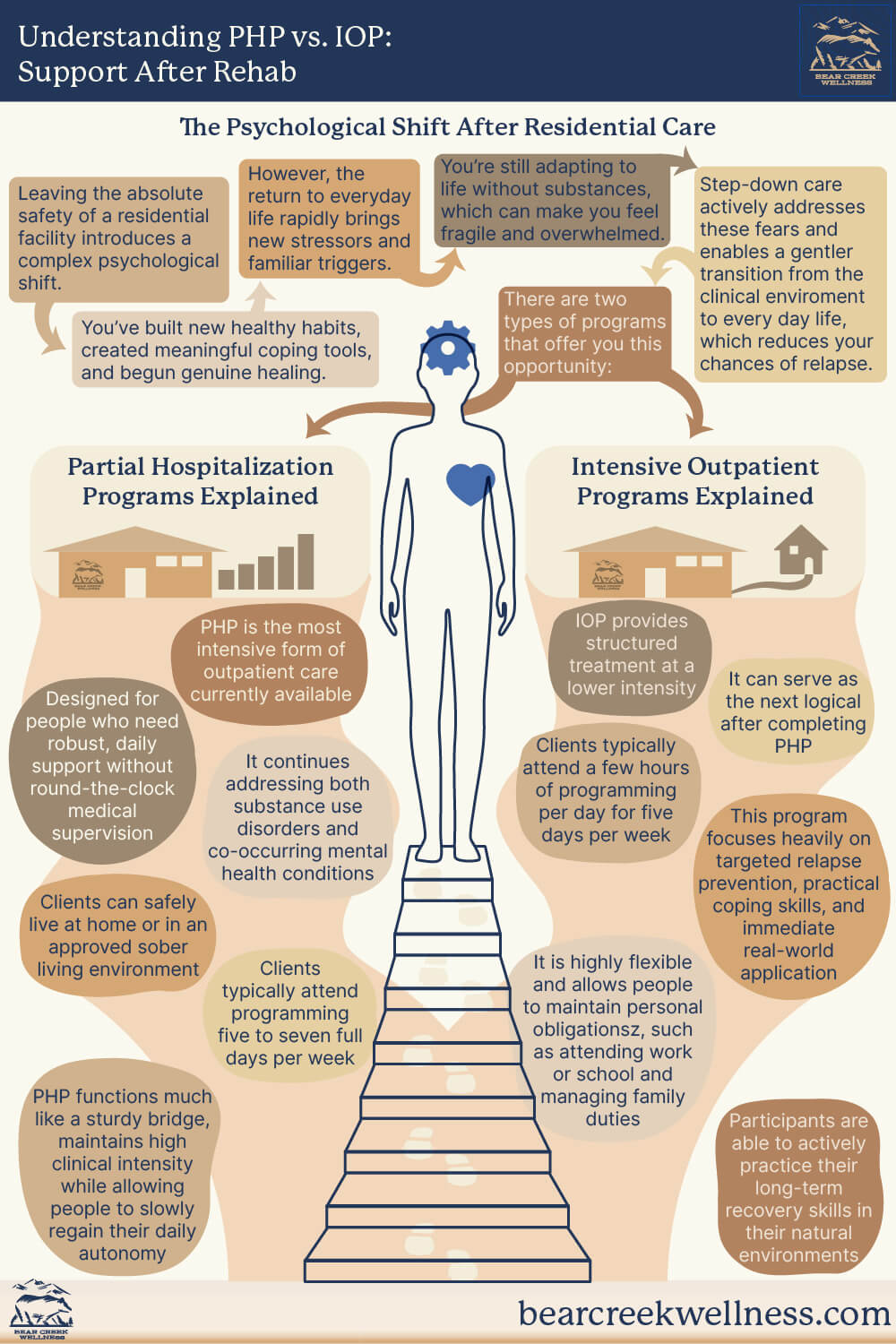
The Psychological Shift After Residential Care
Leaving the absolute safety of a residential facility introduces a complex psychological shift. You have successfully built new healthy habits, learned meaningful coping tools, and begun genuine inner healing. Returning to everyday life rapidly brings new stressors and familiar triggers. Your brain is still adapting to life without substances. During this fragile phase, sudden independence can feel overwhelming. People often experience anxiety about managing employment, repairing strained family dynamics, and facing social situations.
Step-down care actively addresses these specific fears. Instead of abruptly removing your clinical safety net, these programs provide a softer landing. You get to test your new coping skills in the real world while knowing you have a dedicated professional team waiting to process those experiences with you. This drastically reduces the elevated risk of relapse during highly vulnerable moments.
Partial Hospitalization Programs Explained
A Partial Hospitalization Program is the most intensive form of outpatient care currently available. It is thoughtfully designed for individuals who still need robust, daily support without requiring round-the-clock medical supervision. Patients typically attend programming five to seven days a week.
This level of care includes individual therapy, group counseling, active medication management, and psychiatric support. It continues addressing both substance use disorders and co-occurring mental health conditions. The primary advantage here is that clients can safely live at home or in an approved sober living environment. PHP functions much like a sturdy bridge. It maintains high clinical intensity while slowly reintroducing daily autonomy, ensuring a steady, protected integration back into society.
Intensive Outpatient Programs Explained
An Intensive Outpatient Program provides structured treatment at a distinctly lower intensity. It usually serves as the next logical progression after completing PHP. Sometimes, it acts as a direct transition from a recovery center Montana for those completely ready for greater autonomy.
Participants generally attend sessions three to five days a week for a few hours at a time. This format focuses heavily on targeted relapse prevention, practical coping skills, and immediate real-world application. Because it requires fewer hours, IOP provides excellent flexibility for individuals to return to work, attend school, or manage family obligations. It strongly emphasizes positive community integration and allows participants to actively practice their long-term recovery skills in their natural environments.
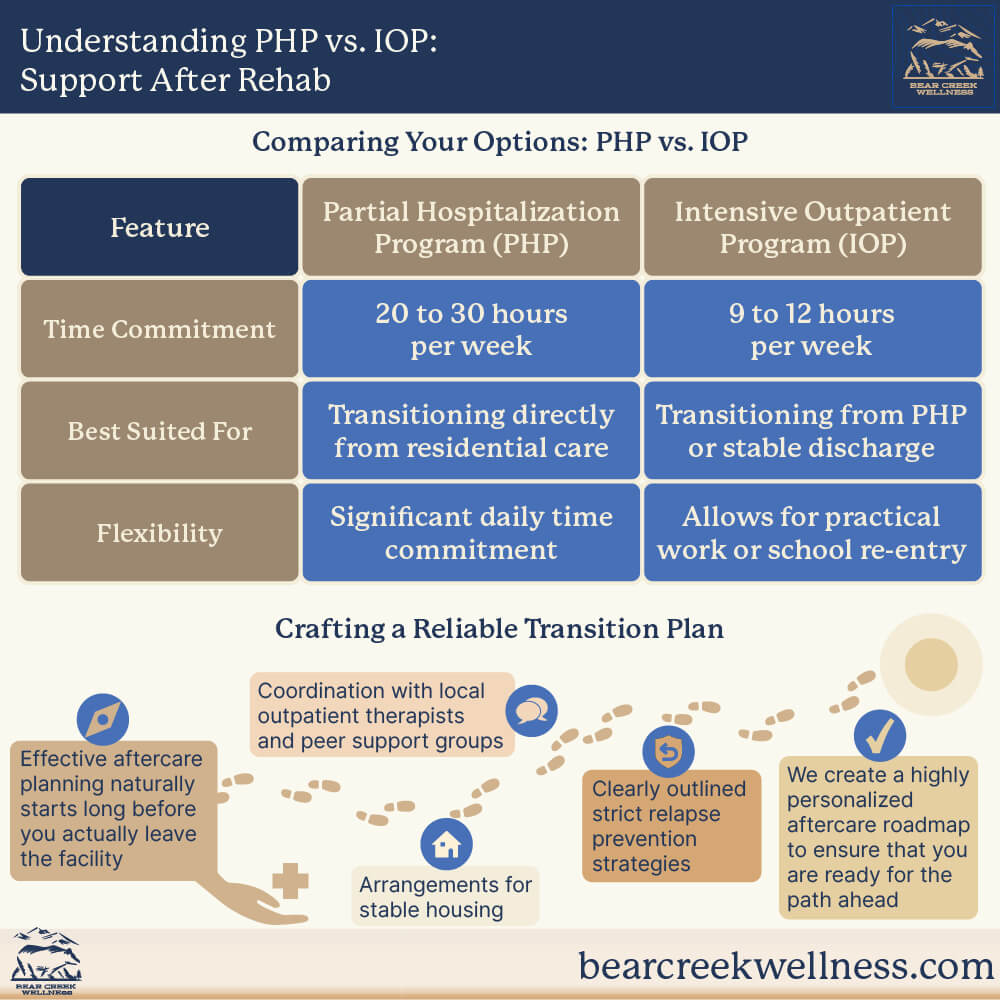
Comparing Your Options: PHP vs. IOP
Choosing the appropriate path depends entirely on your current emotional stability, available home support system, and personal treatment goals. To help clarify the distinctions, consider this brief comparison:
| Feature | Partial Hospitalization Program | Intensive Outpatient Program |
| Time Commitment | 20 to 30 hours per week | 9 to 12 hours per week |
| Best Suited For | Transitioning directly from residential care | Transitioning from PHP or stable discharge |
| Flexibility | Significant daily time commitment | Allows for practical work or school re-entry |
Your dedicated clinical team will expertly help determine the right fit based on your documented progress and psychological readiness.
Crafting a Reliable Transition Plan
Effective aftercare planning naturally starts long before you actually leave the facility. A strong, reliable transition plan goes beyond simply picking a program. It includes seamless coordination with local outpatient therapists and firmly connects you to peer support groups. It also solidifies your arrangements for stable housing and clearly outlines strict relapse prevention strategies.
The compassionate clinical team at a leading treatment center Montana, like Bear Creek Wellness, ensures that every client leaves with a highly personalized aftercare roadmap. We craft a plan that honors your personal progress and fully prepares you for the bright path ahead.
Conclusion
Recovery does not end when residential treatment concludes. It gracefully evolves. Whether you are actively transitioning to outpatient care or supporting someone else through their journey, understanding your specific options is essential. Reach out to Bear Creek Wellness today to safely explore our comprehensive step-down programs and dedicated alumni support network. You never have to walk this path alone.
Andrea was born and raised in Spokane Washington, she moved to Montana with her husband in 2015. Andrea has been in the field of counseling since 2009. As a licensed addiction counselor, she worked primarily in addiction until 2018 when she completed her master’s degree in marriage and family therapy and became a license clinical professional counselor and a licensed marriage and family therapist. Andrea has worked with diverse populations and found her calling working with individuals and couples struggling with substance use and its relational impact. With a passion for recovery and healing families, Andrea has built a private practice in Missoula, MT and serves various populations. Andrea’s love for people and her desire to engage with, and promote, internal healing has fostered a truly unique role aiding individualized journeys in recovery. In her spare time, she enjoys her beautiful property west of Missoula with nature at her front and back doors. Her greatest joy in life is spending time with her granddaughter and breaking the cycle of addiction in her own family.