


When you are working toward recovery, understanding what sets off the urge to use again can mean the difference between staying on your path and losing ground. Emotional triggers, including specific feelings, situations, or memories that spark cravings, are one of the most common challenges people face in their healing journey. Learning to recognize and manage these triggers is essential for building lasting recovery and healing the whole person, not just addressing substance use.
At Bear Creek Wellness, our dual diagnosis treatment Montana programs help you explore the emotional roots of addiction while developing practical tools to navigate life’s inevitable ups and downs in our peaceful, nature-based setting.
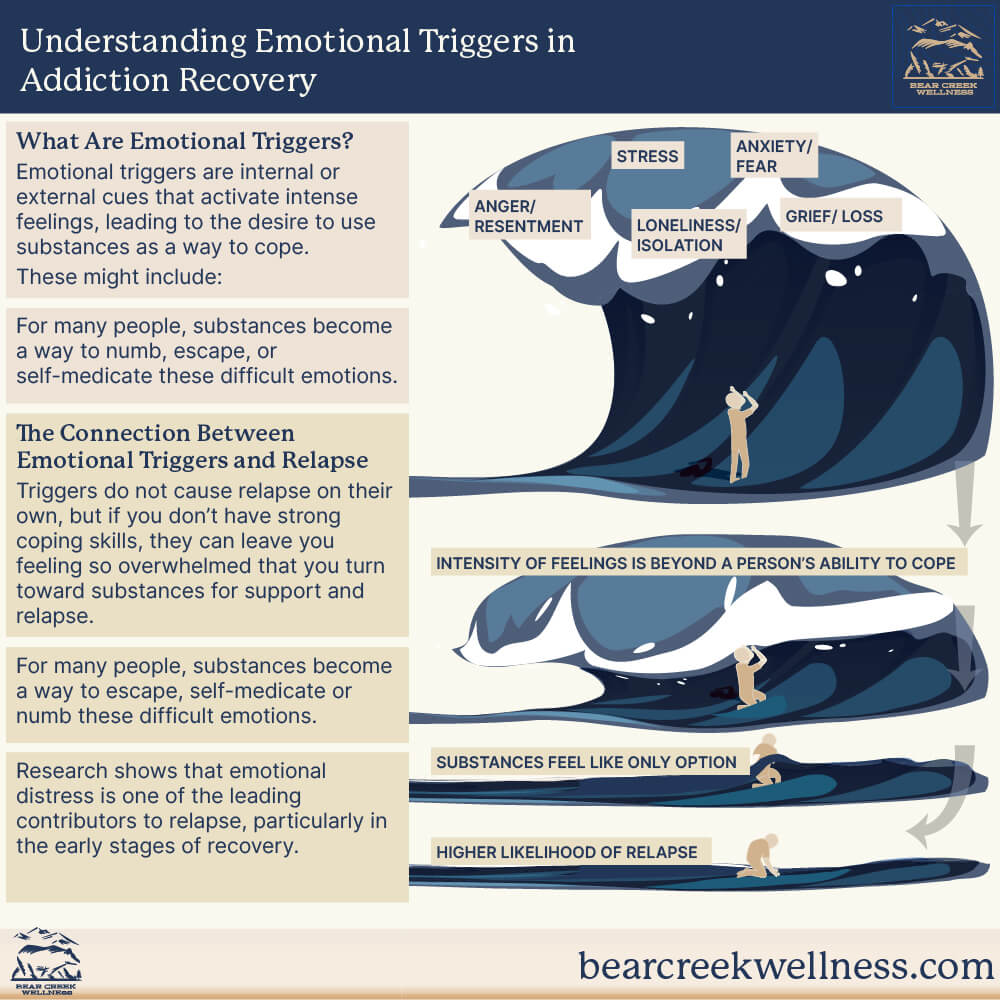
What Are Emotional Triggers?
Emotional triggers are internal or external cues that activate intense feelings, leading to the desire to use substances as a way to cope. These might include:
- Stress or overwhelm from work, relationships, or daily responsibilities
- Loneliness or isolation when disconnected from support systems
- Anger or resentment that feels too big to process
- Grief or loss that brings up unresolved pain
- Anxiety or fear about the future or past trauma
For many people, substances became a way to numb, escape, or self-medicate these difficult emotions. Recovery means learning healthier ways to respond and rediscovering your inner strength in the process.
The Connection Between Emotional Triggers and Relapse
Triggers do not cause relapse on their own, but when you have not developed strong coping skills, they can feel overwhelming. Research shows that emotional distress is one of the leading contributors to relapse, particularly in the early stages of recovery. That is why drug addiction treatment Montana programs that address mental health alongside substance use are so effective.
When co-occurring conditions like depression, anxiety, PTSD, or trauma are not treated, emotional triggers become even more powerful. Integrated, compassionate care helps you heal the root causes, not just the symptoms, creating space for true transformation.
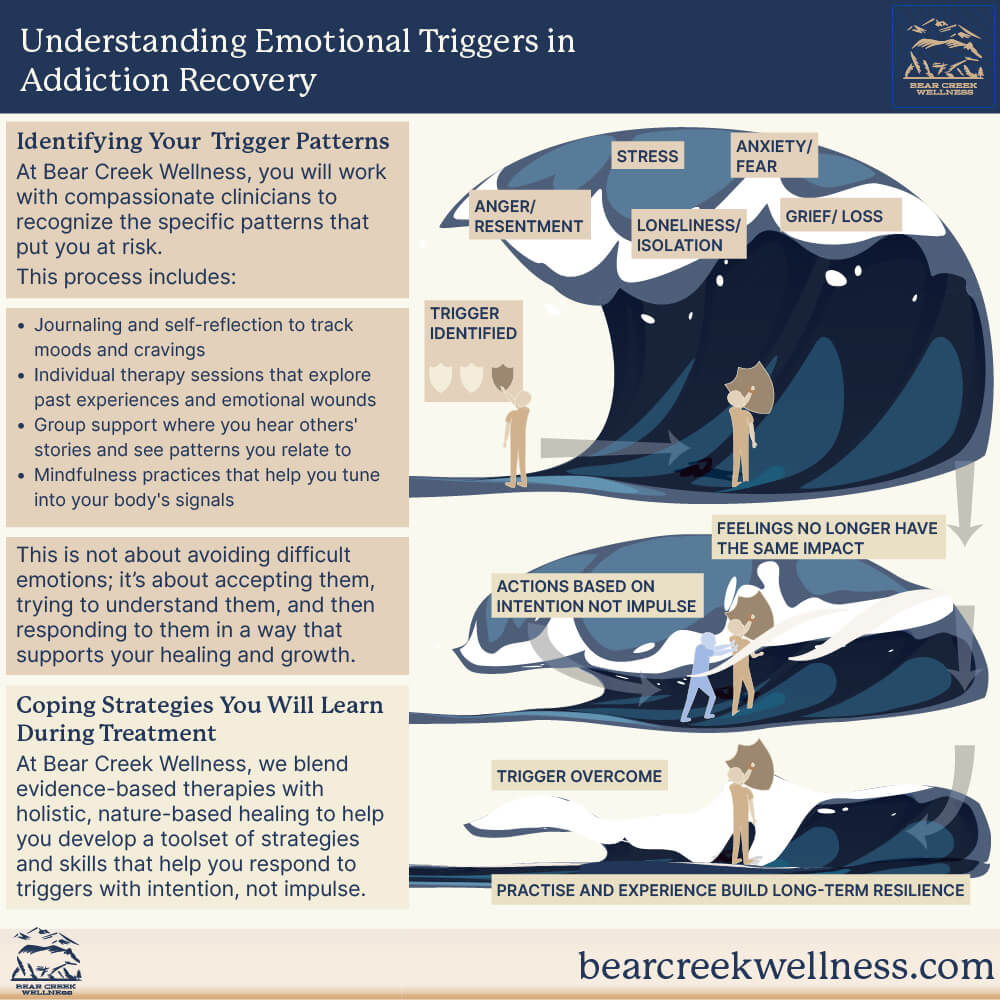
Identifying Your Personal Trigger Patterns
During your time at Bear Creek Wellness, you will work with compassionate clinicians to recognize the specific patterns that put you at risk. This process includes:
- Journaling and self-reflection to track moods and cravings
- Individual therapy sessions that explore past experiences and emotional wounds
- Group support where you hear others’ stories and see patterns you relate to
- Mindfulness practices that help you tune into your body’s signals
The goal is not to avoid all difficult emotions because that is not realistic or healthy. Instead, you will learn to sit with discomfort, understand what it is telling you, and choose a response that supports your healing and growth.
Coping Strategies You Will Learn During Treatment
Effective dual diagnosis treatment Montana programs equip you with a toolbox of emotional regulation strategies. At Bear Creek Wellness, we blend evidence-based therapies with holistic, nature-based healing to support mind, body, and spirit in our residential setting.
Evidence-Based Techniques
- Cognitive Behavioral Therapy (CBT): Used to challenge unhelpful thought patterns.
- Dialectical Behavior Therapy (DBT): Focused on emotion regulation and distress tolerance.
- Trauma-Informed Care: Creates safety while addressing past wounds with gentleness and respect.
Holistic and Experiential Healing
- Equine Therapy: Builds trust, emotional awareness, and connection.
- Yoga and Breathwork: Calms the nervous system and reduces reactivity.
- Art Therapy: Expresses feelings that are hard to put into words.
- Nature Immersion: Utilizes Montana’s peaceful wilderness to ground yourself and restore balance.
These tools help you respond to triggers with intention rather than impulse, empowering you to make choices aligned with your healing.
Building Long-Term Resilience
Recovery is not a one-time event but rather an ongoing journey of growth and self-discovery. As you move through treatment and into aftercare, you will continue strengthening your ability to:
- Recognize early warning signs of emotional distress
- Reach out for support before cravings escalate
- Practice self-compassion when you are struggling
- Create a lifestyle that prioritizes wellness, purpose, and connection
At our residential treatment center in Montana, you are surrounded by a supportive community and the healing power of nature, forming a foundation that makes lasting transformation possible. Here, you are not just working toward sobriety. You are rediscovering who you are and building a life worth living.
Begin Your Healing Journey in Montana
Understanding your emotional triggers is one of the most powerful steps you can take in recovery. At Bear Creek Wellness, our personalized, trauma-informed dual diagnosis treatment Montana programs help you build the skills, insight, and resilience needed for lasting transformation across mind, body, and spirit.
You do not have to navigate this journey alone. In our peaceful ranch-style setting surrounded by Montana’s wilderness, you will find the safety, support, and hope you deserve. This is more than treatment. It is a path to rediscovering your purpose and wholeness.
Ready to take the next step? Contact Bear Creek Wellness today to learn more about our holistic approach to recovery and begin your transformation.
Source:
[1] https://pmc.ncbi.nlm.nih.gov/articles/PMC4553654/

Andrea was born and raised in Spokane Washington, she moved to Montana with her husband in 2015. Andrea has been in the field of counseling since 2009. As a licensed addiction counselor, she worked primarily in addiction until 2018 when she completed her master’s degree in marriage and family therapy and became a license clinical professional counselor and a licensed marriage and family therapist. Andrea has worked with diverse populations and found her calling working with individuals and couples struggling with substance use and its relational impact. With a passion for recovery and healing families, Andrea has built a private practice in Missoula, MT and serves various populations. Andrea’s love for people and her desire to engage with, and promote, internal healing has fostered a truly unique role aiding individualized journeys in recovery. In her spare time, she enjoys her beautiful property west of Missoula with nature at her front and back doors. Her greatest joy in life is spending time with her granddaughter and breaking the cycle of addiction in her own family.