

When you’re struggling with substance use, anxiety often feels like a constant shadow. Racing thoughts, physical tension, panic attacks, and overwhelming fear can make every day feel impossible. For many people seeking recovery, anxiety and addiction are deeply intertwined—and understanding this connection is essential for lasting healing. Anxiety disorders complicate addiction treatment in significant ways, but with the right approach, integrated care can address both conditions simultaneously and support your journey toward transformation.
The Hidden Connection Between Anxiety and Substance Use
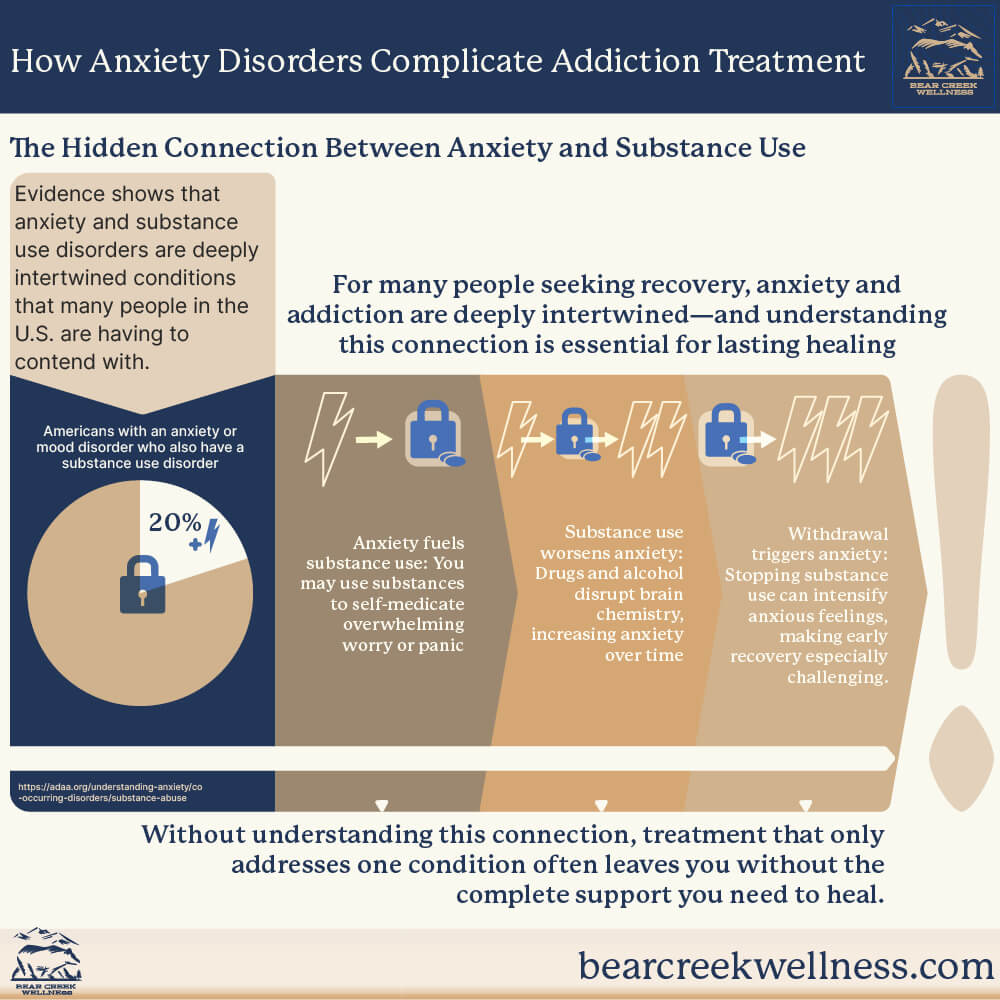
Anxiety disorders and substance use disorders frequently occur together. According to the Anxiety and Depression Association of America, about 20% of Americans with an anxiety or mood disorder also have a substance use disorder. Many people initially turn to alcohol or drugs as a way to quiet anxious thoughts, calm physical symptoms, or cope with social situations that feel unbearable. What starts as temporary relief often becomes a cycle that’s difficult to break.
The relationship works both ways:
- Anxiety fuels substance use: You may use substances to self-medicate overwhelming worry or panic
- Substance use worsens anxiety: Drugs and alcohol disrupt brain chemistry, increasing anxiety over time
- Withdrawal triggers anxiety: Stopping substance use can intensify anxious feelings, making early recovery especially challenging.
Without understanding this connection, treatment that only addresses one condition often leaves you without the complete support you need to heal.
Why Standard Treatment Approaches Often Miss the Mark
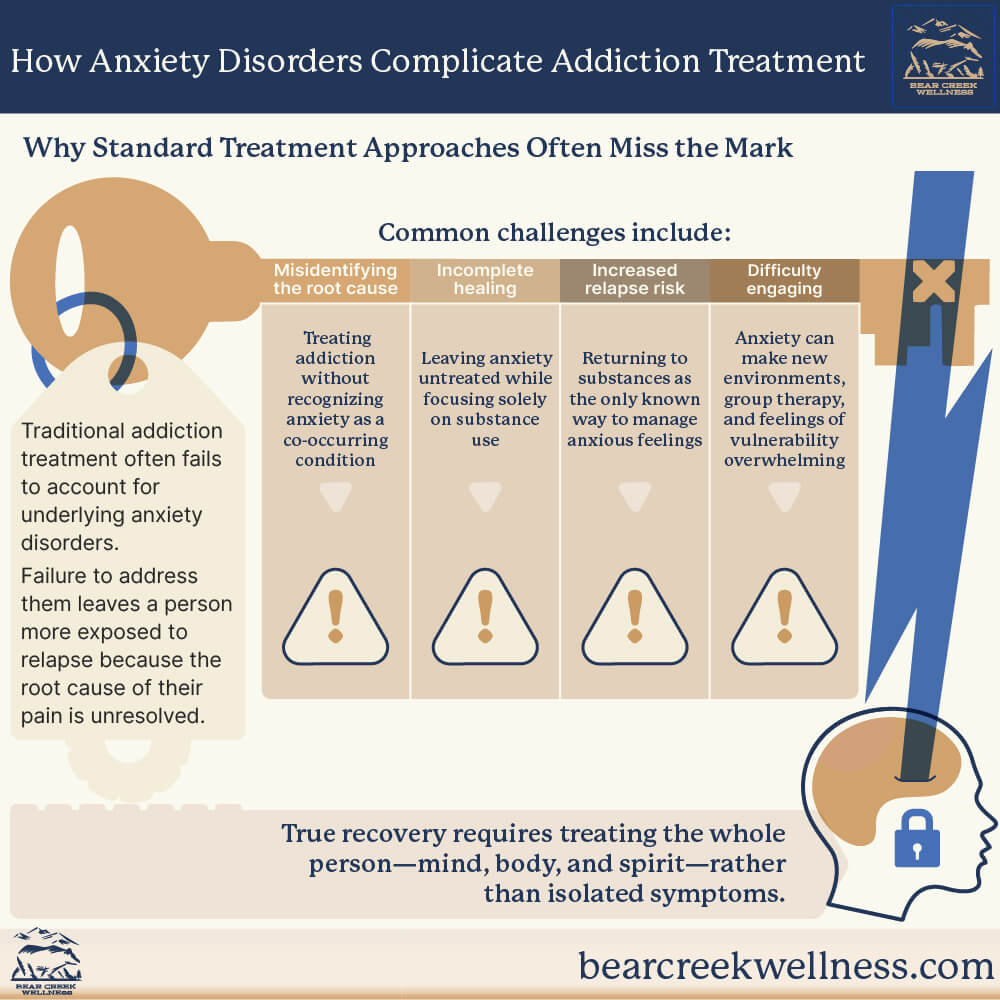
Traditional addiction treatment that doesn’t account for underlying anxiety disorders can leave you feeling frustrated and unsupported. If your anxiety isn’t addressed, you’re more vulnerable to relapse because the source of pain remains unresolved.
Common challenges include:
- Misidentifying the root cause: Treating addiction without recognizing anxiety as a co-occurring condition
- Incomplete healing: Leaving anxiety untreated while focusing solely on substance use
- Increased relapse risk: Returning to substances as the only known way to manage anxious feelings
- Difficulty engaging in treatment: Anxiety can make group therapy, new environments, and vulnerability feel overwhelming
True recovery requires treating the whole person—mind, body, and spirit—rather than isolated symptoms.
The Power of Dual Diagnosis Treatment
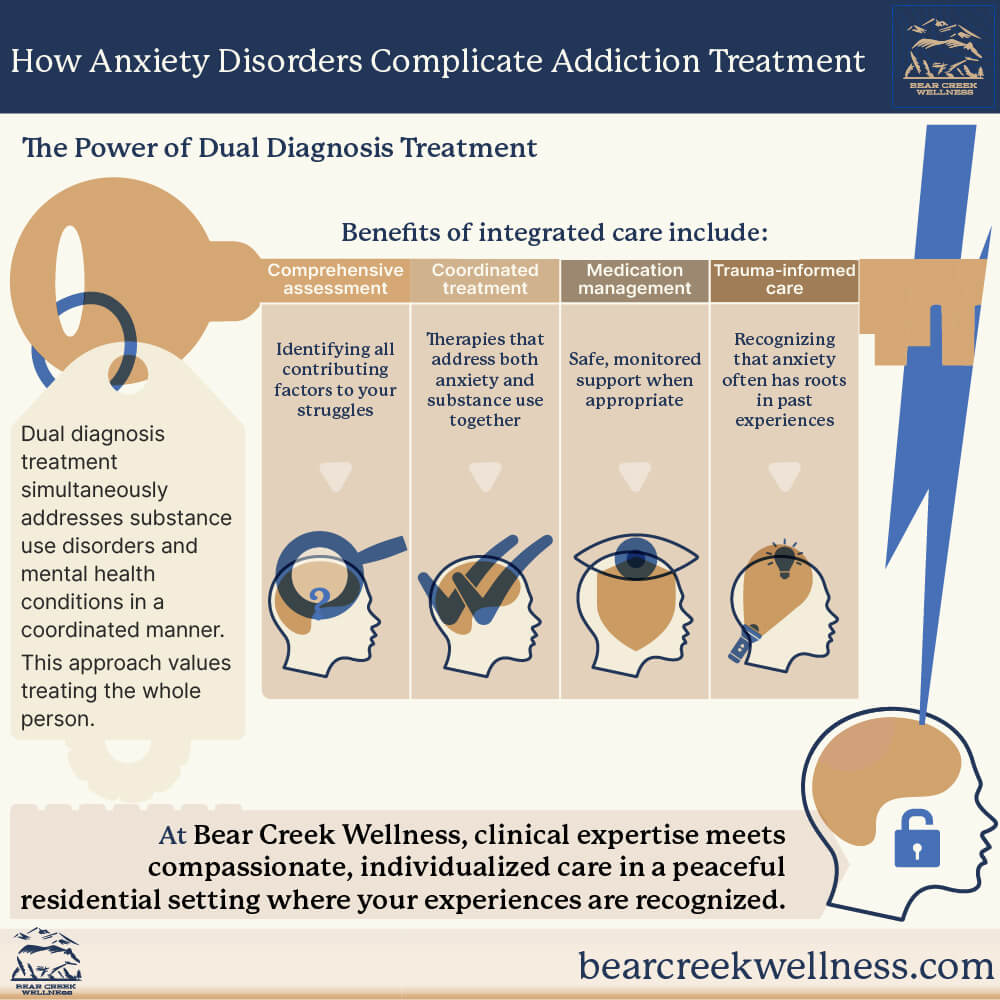
Dual diagnosis treatment addresses both substance use disorders and mental health conditions—like anxiety disorders—at the same time, in a coordinated way. This integrated approach recognizes that healing requires treating the whole person, honoring your unique story and needs.
At a dual diagnosis treatment Montana center like Bear Creek Wellness, clinical expertise meets compassionate, individualized care in a peaceful residential setting. Treatment teams work collaboratively to create plans that honor your experiences and support your transformation.
Benefits of integrated care include:
- Comprehensive assessment: Identifying all contributing factors to your struggles
- Coordinated treatment: Therapies that address both anxiety and substance use together
- Medication management: Safe, monitored support when appropriate
- Trauma-informed care: Recognizing that anxiety often has roots in past experiences
Nature-Based Healing for Anxious Minds
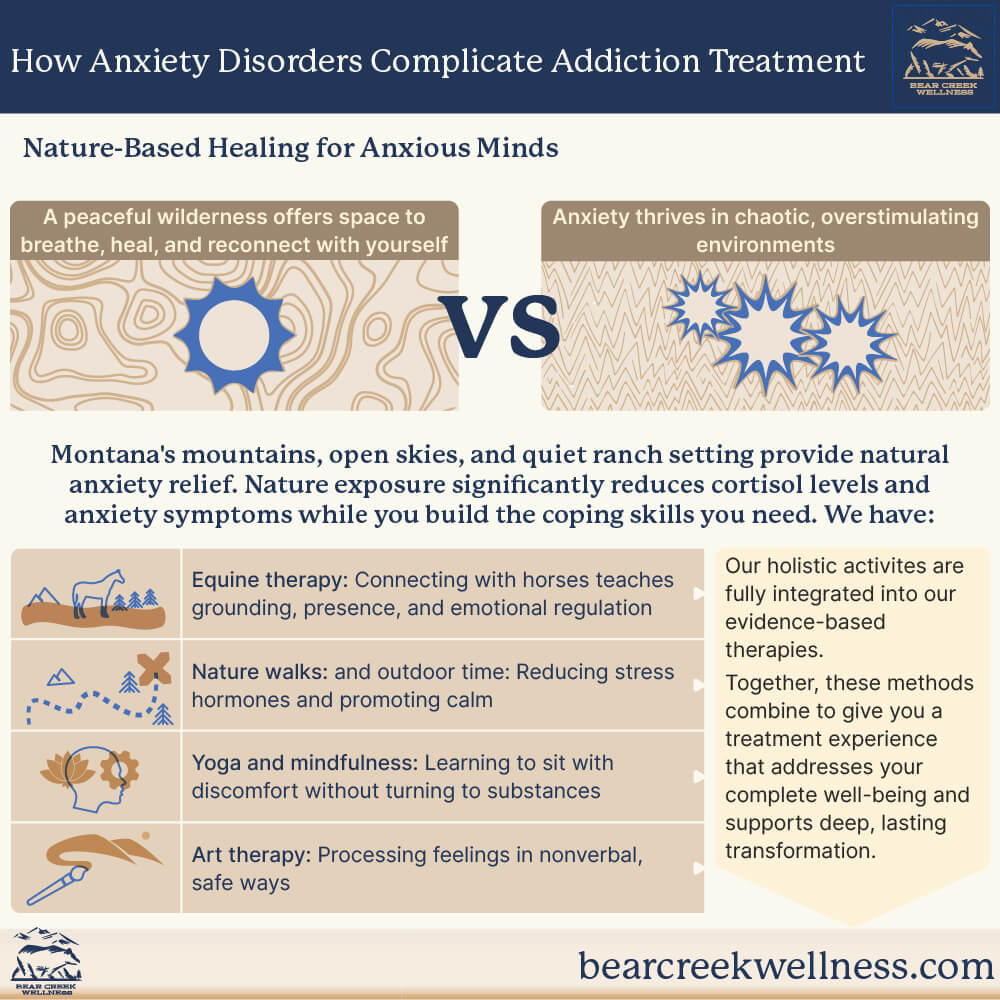
Anxiety thrives in chaotic, overstimulating environments. Recovery in a peaceful wilderness setting offers something fundamentally different—space to breathe, heal, and reconnect with yourself.
Montana’s mountains, open skies, and quiet ranch setting provide natural anxiety relief. Research published in Frontiers in Psychology shows that nature exposure significantly reduces cortisol levels and anxiety symptoms. Nature-based therapies help calm your nervous system while building coping skills that last:
- Equine therapy: Connecting with horses teaches grounding, presence, and emotional regulation
- Nature walks and outdoor time: Reducing stress hormones and promoting calm
- Yoga and mindfulness: Learning to sit with discomfort without turning to substances
- Art therapy: Processing feelings in non-verbal, safe ways
These holistic approaches complement evidence-based therapies, creating a treatment experience that addresses your complete well-being and supports deep, lasting transformation.
Building a Life Beyond Anxiety and Addiction
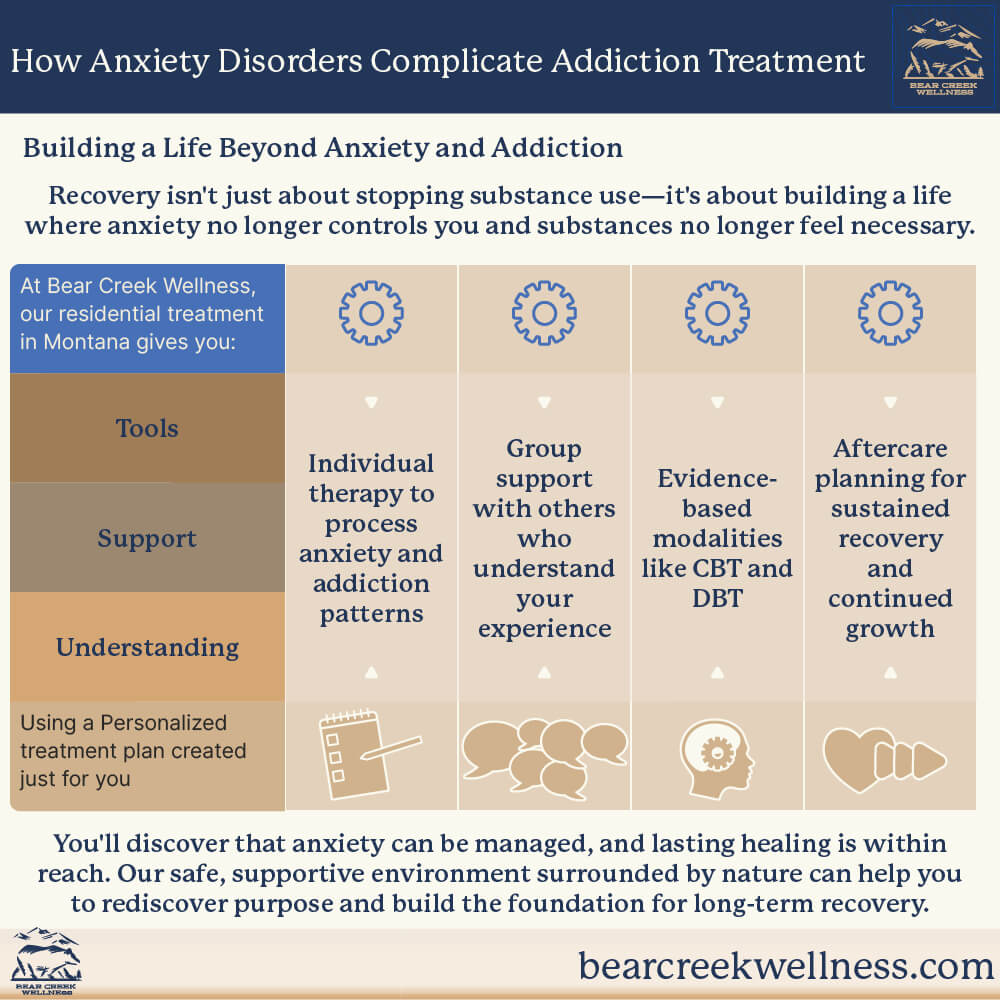
Recovery isn’t just about stopping substance use—it’s about building a life where anxiety no longer controls you and substances no longer feel necessary. Through residential treatment in Montana, you gain tools, support, and understanding that make this transformation possible.
Personalized treatment plans at Bear Creek Wellness include:
- Individual therapy to process anxiety and addiction patterns
- Group support with others who understand your experience
- Evidence-based modalities like CBT and DBT
- Aftercare planning for sustained recovery and continued growth
You’ll discover that anxiety can be managed, that you’re not alone, and that lasting healing is within reach. In a safe, supportive environment surrounded by nature’s quiet strength, you can rediscover purpose and build the foundation for long-term recovery.
Begin Your Journey to Integrated Healing
If anxiety and substance use have been controlling your life, you deserve compassionate care that addresses both. At Bear Creek Wellness, our addiction treatment center in Montana offers trauma-informed, nature-based residential treatment designed for your unique healing journey. You don’t have to face this alone.
Contact us today to learn how we can support your path to recovery.
Sources:
[1] https://www.frontiersin.org/journals/psychology[2] https://adaa.org/understanding-anxiety/co-occurring-disorders/substance-abuse
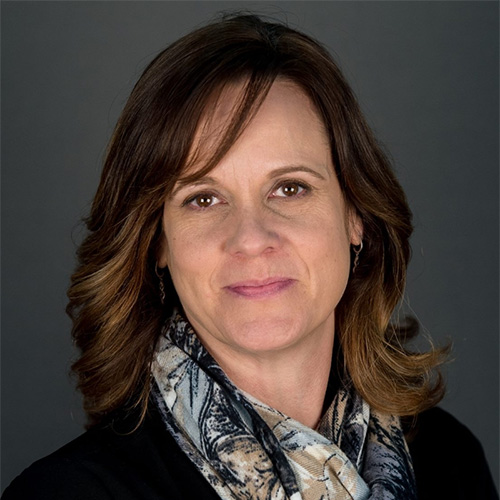
Andrea was born and raised in Spokane Washington, she moved to Montana with her husband in 2015. Andrea has been in the field of counseling since 2009. As a licensed addiction counselor, she worked primarily in addiction until 2018 when she completed her master’s degree in marriage and family therapy and became a license clinical professional counselor and a licensed marriage and family therapist. Andrea has worked with diverse populations and found her calling working with individuals and couples struggling with substance use and its relational impact. With a passion for recovery and healing families, Andrea has built a private practice in Missoula, MT and serves various populations. Andrea’s love for people and her desire to engage with, and promote, internal healing has fostered a truly unique role aiding individualized journeys in recovery. In her spare time, she enjoys her beautiful property west of Missoula with nature at her front and back doors. Her greatest joy in life is spending time with her granddaughter and breaking the cycle of addiction in her own family.